Becoming more athletic
How to incorporate athleticism into your training

Athleticism is the ability to perform physical feats at a high level. Things such as run fast, jump high, or catch a ball moving at high speeds. While some are people are naturally more athletic than others, you can always work on improving your athleticism no matter what level you are at. Sadly, most people never do anything athletic again after playing their last high school soccer game.
Then they go to play pick up basketball or softball with their buddies and wonder why they have lost a step, or their knees ache after…
Even if someone is a regular gym goer, it is very rare someone is doing “athletic” movements in the gym. Squats, bench press, and running on a treadmill at a constant speed, will not challenge your athletic abilities. It’s hard for me to even consider box jumps as athletic, but it is a start. All of these things are performed in a straight line. There is no rotation, change of direction, or unilateral components to them.
I love this graphic from Clifton Harski that describes the spectrum of athletic demands of different activities
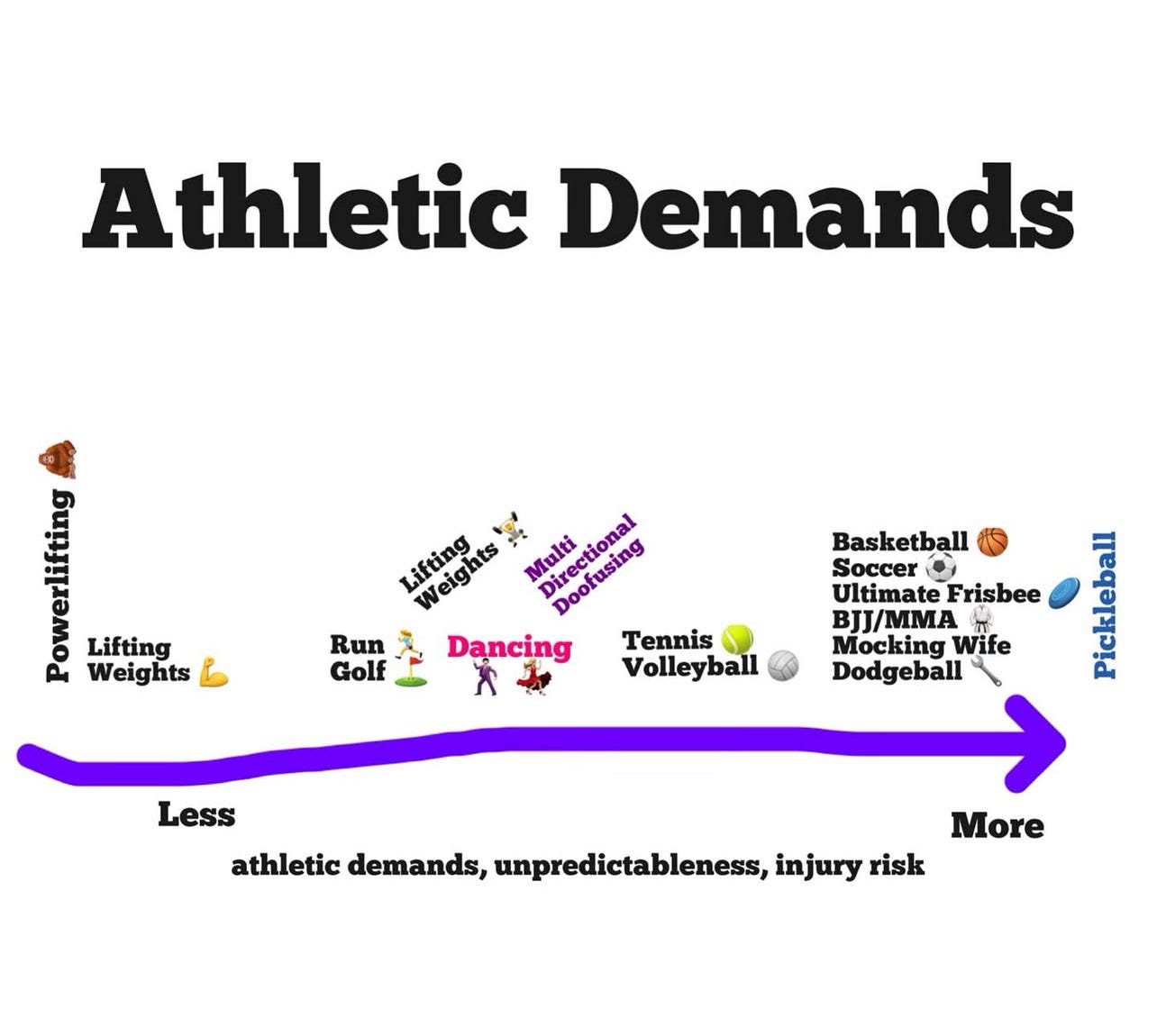
As you can see, lifting weights is on the lower end of the “athletic demands spectrum”. This is because lifting weights only trains your strength. Meanwhile the activities on the other end are mostly sports. This is because sports contain the aspect of unpredictability and requires qualities such as coordination, speed, change of direction, rotation, reaction, and more.
As you can see, arguably the best way to get more athletic is to play a sport. Most of you probably already knew this, but finding time or a place to play sports is not always easy. Some have busy lives or are unable to find people to play the sports they love with.
That’s why I’m writing this article. I am here to provide you with alternative solutions to playing sports to develop and train athletic qualities. I am going to try and give you activities that you can do in most typical gyms or fields with minimal equipment.
#1 Sprinting
Speed is probably the gold standard of measuring someones athletic abilities, being faster will never hurt you in a sport. “Speed kills.”
Sprinting is possibly the most rewarding activity in terms of physical adaptations that you can perform. It will make you better, faster, and stronger. It doesn’t matter how fast you are, you can always sprint. That’s the beauty of it, as long as you are giving your all out effort you will reap the same benefits of sprinting that someone else would.
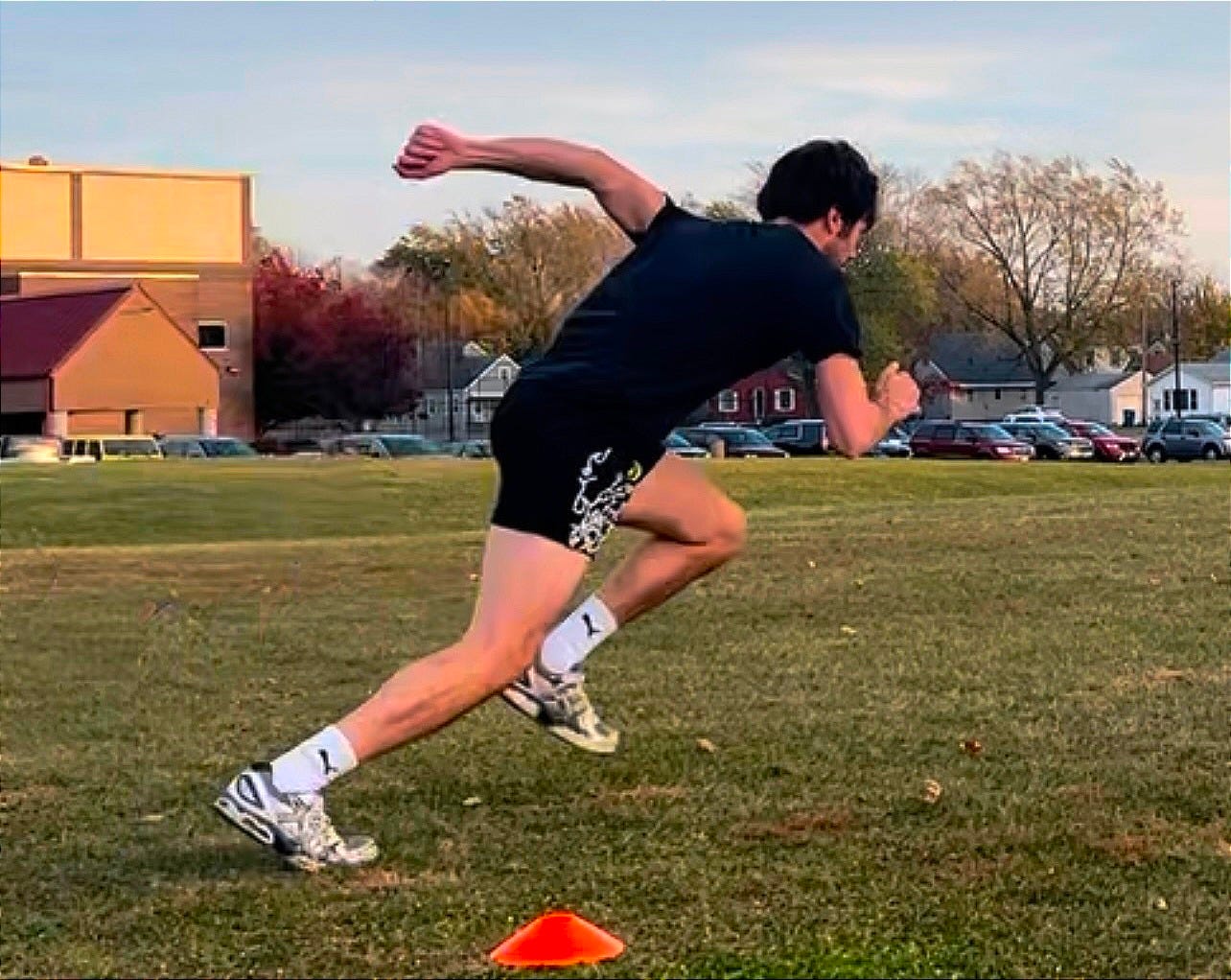
With that said, sprinting is also very demanding on your nervous system and muscle tissues. If you haven’t sprinted in a long time, I would not recommend just going into an all out sprint right away.
First, you should perform a thorough warm up. You can look up any dynamic warm up online but I would recommend that it includes: jogging, dynamic stretching, and skipping/hopping.
I would start with session where you gradually build up intensity. If you are first starting out, I would recommend to cap it at 80% of your max intent. Do that for a few weeks then bump to 90%. Then only after you’ve sprinted a handful of times and conditioned your body, you can try an all out sprint.
I would recommend only starting with 2-3 sprints the first time you go. Then each session you can add one on top. Although, I don’t think there is any sense in doing any more than 10 sprints in a given session.
If you are sprinting to get faster, doing reps when you are fatigued will not assist that goal. If you are doing true, high intensity sprints. You should feel very fatigued after a few of them. This depends on distance and rest, but under most circumstances you will.
Keys to starting sprinting:
Warm up properly
Start slow if you are a beginner
Increase volume (reps) and intensity over time
#2 Jumping
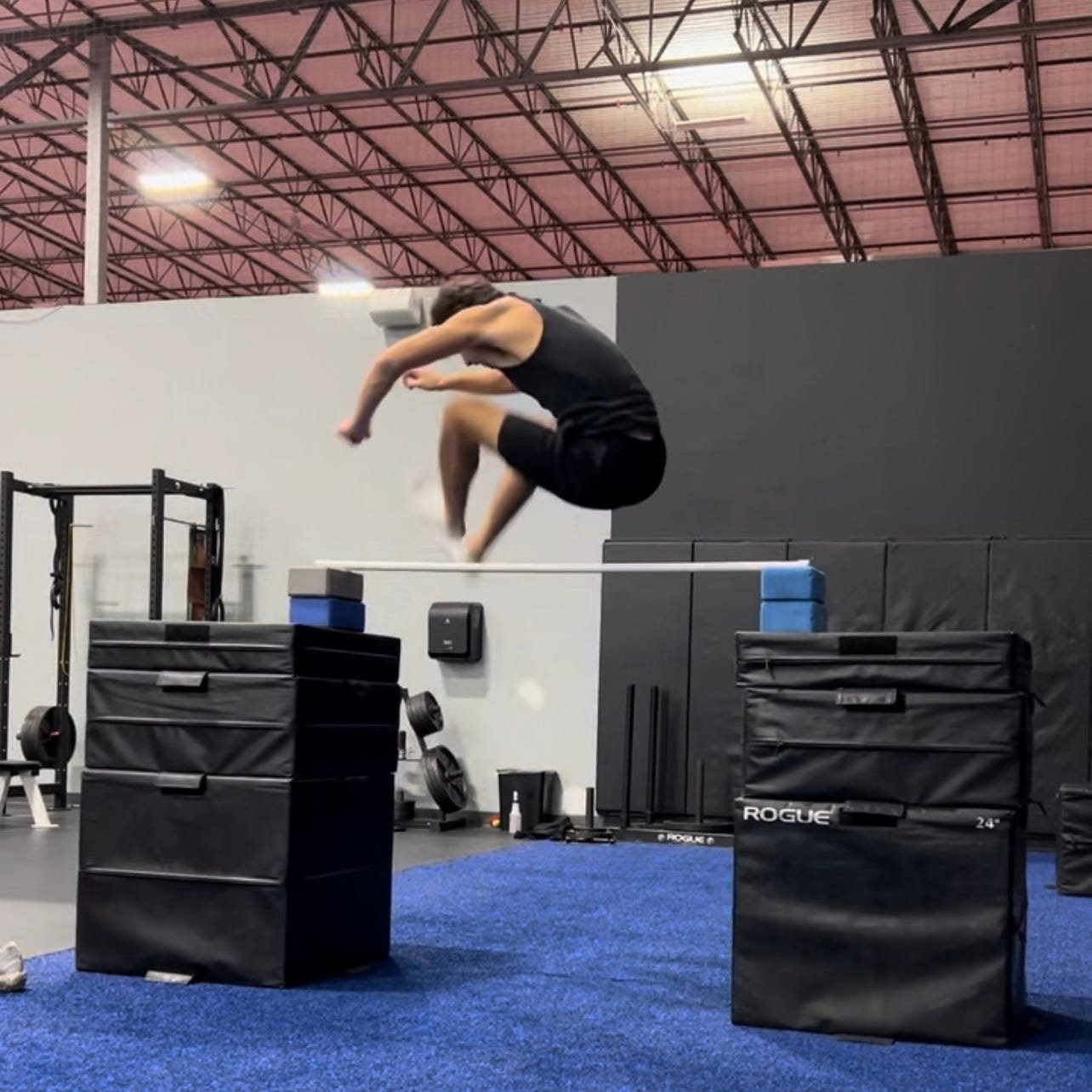
I don’t think I need to explain what jumping is but I will explain the different types and how to apply it into your training. Typically jumping is implemented in training via plyometric exercises.
A plyometric exercise just describes anything with a rapid ground contact time (where you touch and leave the ground quickly). Technically sprinting is even a plyometric but for now we will put that in it’s own separate category.
Plyometric exercises can improve your tendon stiffness, rate of force development, and even your bone density.
Here are some examples of very basic, beginner friendly plyometrics to incorporate into your training:
Box jumps
Broad jumps
Jumping rope
Skater jumps
As with sprinting, these have the ability to make you sore due to the high eccentric forces, so start slowly. I recommend 1-2 sets and 5 reps. Do them at the beginning of your workout to avoid injury.
#3 Change of direction
Change of direction if probably the least commonly performed type of exercise you will see out of any average gym goer.
These drills are exactly what they sound like, you change the direction in which you are moving. Change of direction occurs all of the time in sports because a lot of the time you are reacting to an external object such as a ball or another person.
A good example of this is the 3 cone drill or the L drill. These are usually used as tests of change of direction ability in the NBA or NFL.
There is pretty much unlimited ways to train change of direction it really just depends on how creative you can be. A good place to start is moving from backward to forward (vise versa) and moving side to side. Simple things like backpedaling to sprinting. Or shuffling side to side between two objects.
As you start to practice them more, you should be able to get more creative with the drills. You can always go on YouTube and look up ideas for more drills.
Wrapping up
These are are a few ways you can start incorporating athleticism into your training. Everyone should be training like an athlete. Whether your goal is gaining muscle or losing fat, training like an athlete will aid in both of these endeavors. If scaled appropriately, these movements can benefit anyone, regardless of experience level.
Unlike sitting on a leg-press machine, this prepares you for real-life circumstances and challenges. The more qualities you train, the stronger, more resilient, and adaptable you will become — train them all.